RimZim, Lahori Zeera and the Big Shift in Indian Beverage Trends
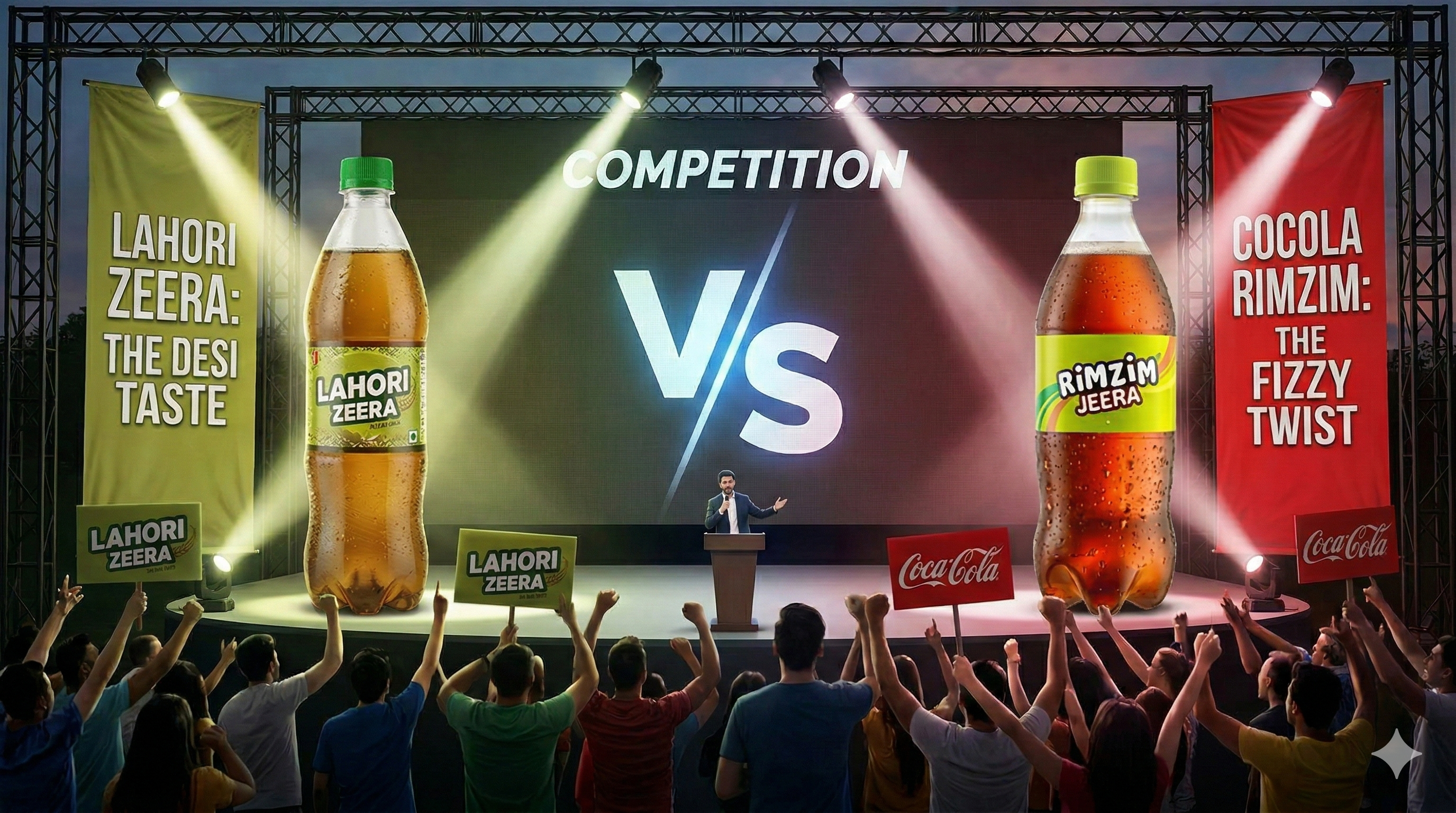
For years, the Indian soft drink conversation was simple. It was cola. It was global. It was aspirational.
If you walked into a kirana store in the 2000s, the fridge told you what “cool” meant — and most of it came from The Coca-Cola Company or its global rivals.
But something interesting has happened.
The Indian consumer has changed.
And that change is showing up in something as small — and as powerful — as a bottle of jeera soda.
Take RimZim. Launched in the 80s by Parle Agro, it was India’s original carbonated jeera drink — chatpata, slightly spicy, proudly different. It was later acquired by The Coca-Cola Company and slowly faded as cola dominated shelves.
Fast forward to today, and RimZim is back.
Coincidence? Not really.
Because in between, a brand like Lahori Zeera quietly did what big global portfolios didn’t — it trusted Indian taste. Estimated Revenue (2026) over 500 Crore
It didn’t try to become western. It didn’t dilute the spice. It didn’t apologize for being desi.
And consumers responded.
What’s Actually Changing in Modern Indian Consumer Behaviour?
This isn’t just about soft drinks. It’s about identity.
- Aspiration is no longer only global There was a time when drinking cola felt like participating in global culture. Today’s Indian consumer is confident. Wearing Indian brands, eating Indian flavours, drinking jeera soda — it doesn’t feel “small-town” anymore. It feels authentic.
- Flavour depth is winning over plain sweetness Consumers are bored with uniform sweetness. They want tang, spice, complexity. They want something that feels alive on the tongue.
- Health perception matters — even if the product hasn’t changed dramatically Jeera-based drinks feel lighter. More digestive. More “natural.” Whether fully accurate or not, perception influences behaviour. And perception today favours local, spice-forward profiles over sugary cola.
- Regional pride is strong Tier 2 and Tier 3 India are no longer trying to copy metros. They’re driving growth. And they’re choosing products that reflect their taste, not just global marketing.
- Loyalty is weaker, experimentation is stronger Younger consumers rotate brands. They try what’s new, what’s trending, what feels different. Variety is exciting.
So What Happens Next? (2026–2030)
The overall carbonated drink market in India will continue growing steadily — helped by distribution expansion and rising incomes.
But the faster growth will likely come from Indian-flavour carbonated drinks — jeera, masala, regional twists. This segment could outpace traditional cola growth significantly over the next 4–5 years.
Why?
Because it’s not just a flavour shift, it’s a mindset shift.
The Indian consumer is no longer choosing between “modern” and “traditional.”
They want modern packaging with traditional taste. They want global quality with an Indian soul.
And brands that understand this duality will win.
What Can Other Brands Learn?
The jeera comeback teaches something powerful.
First, never underestimate dormant brand equity. Sometimes the answer isn’t launching something new — it’s relaunching something relevant.
Second, authenticity scales. Consumers can sense when a brand is pretending versus when it owns its identity.
Third, distribution beats noise. Lahori Zeera didn’t win only because of advertising. It won because it was available, visible, and priced right in the markets that mattered.
Fourth, behaviour shifts before strategy does. The smart brands watch the consumer early.
This isn’t a cola war story.
It’s a confidence story.
India doesn’t need to imitate to feel aspirational anymore. It can flavour aspiration with jeera, spice, and local pride.
And honestly? That might be the biggest shift of all.
Here is Porter's 5 Analysis-
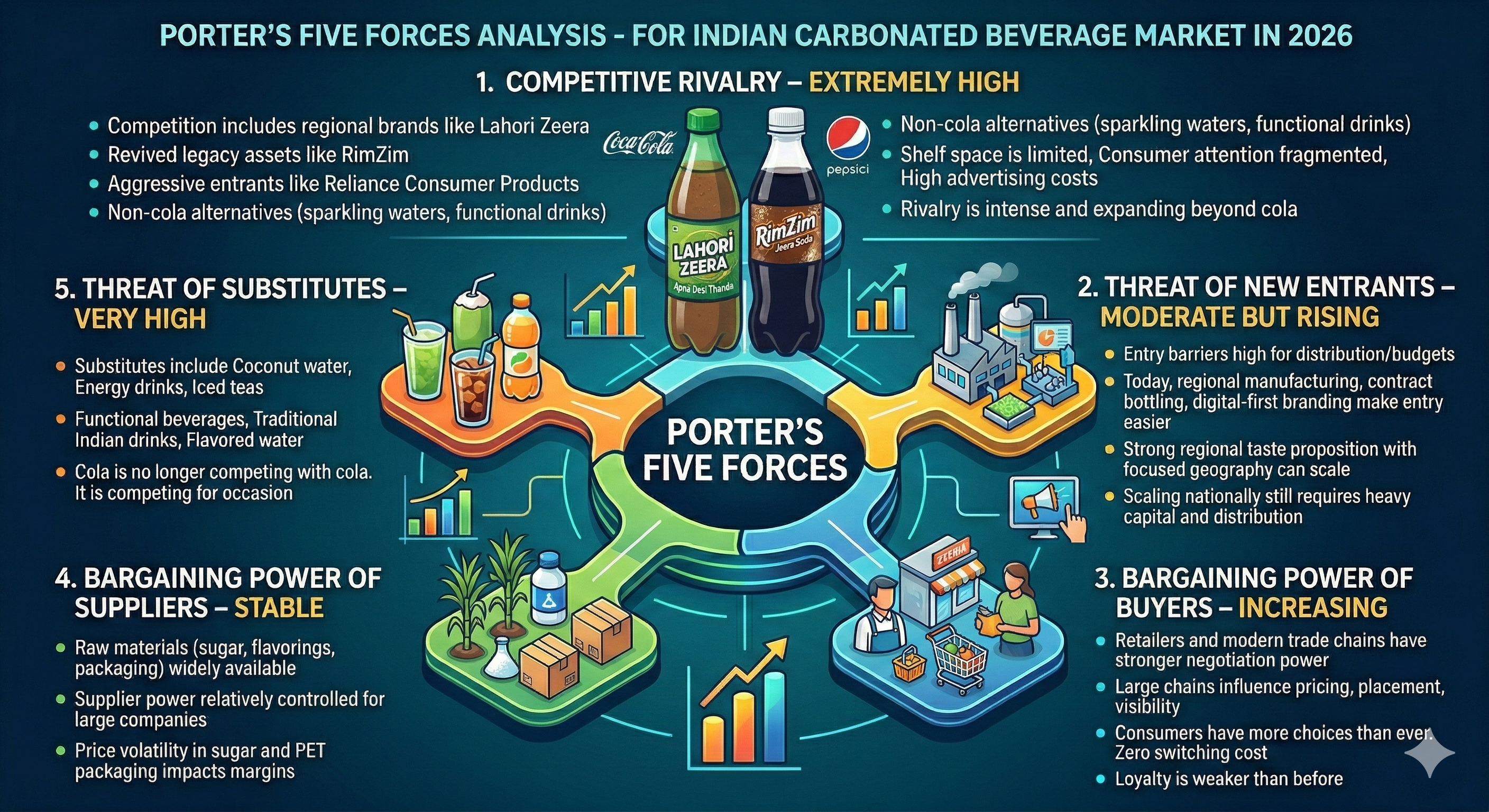
Finding this interesing check out more in the resources section

Pooja Shukla
Pooja Shukla is the CEO of FieldNet Global Research LLP and a market research strategist specializing in healthcare, B2B, consumer, and global market intelligence. She writes about market research, customer insights, competitive intelligence, AI-driven research, and business strategy, helping organizations make data-backed decisions through actionable research.
Share this post: