What is marketing? Why it is required? What percentage of fund to allocate for marketing?
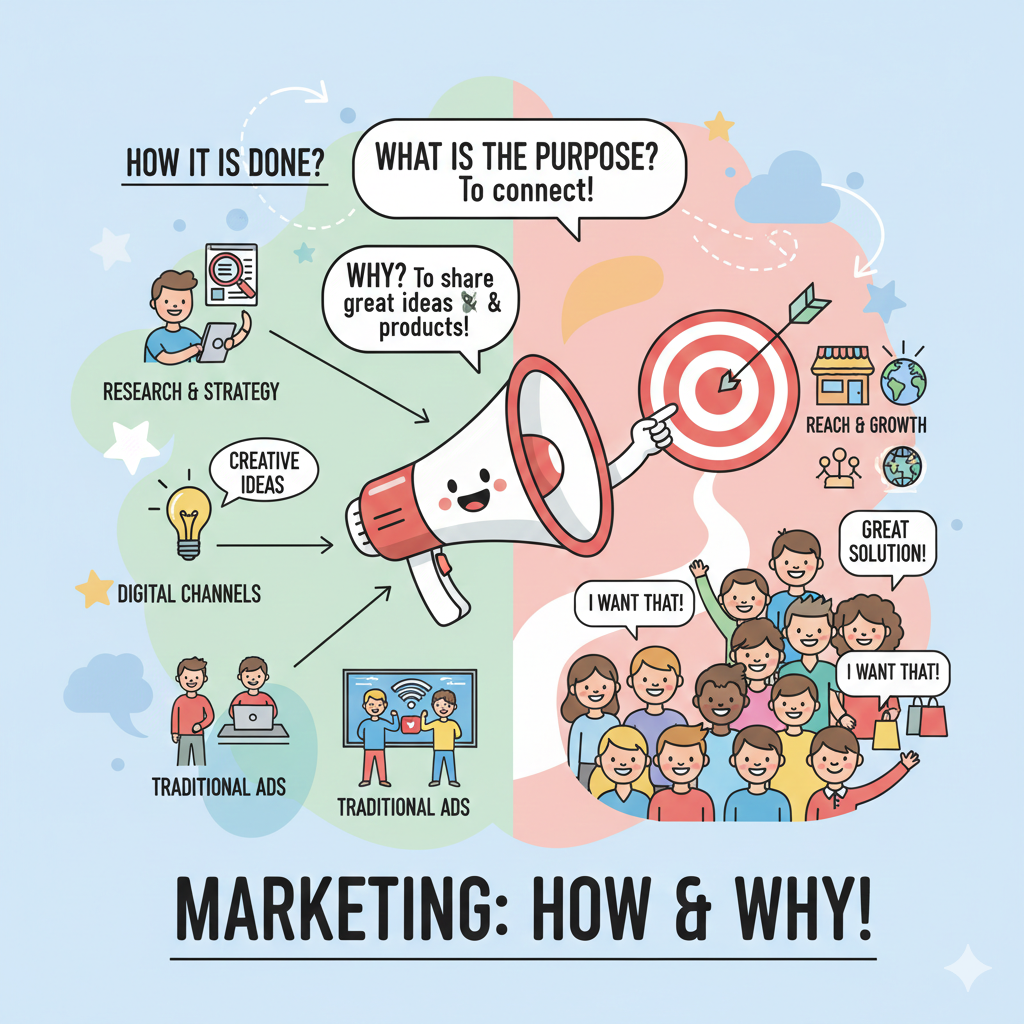
Marketing in the Age of AI & D2C: Why It Still Matters More Than Ever
In a world where D2C brands scale overnight, AI writes ad copies, and automation drives performance campaigns, many founders ask:
“Do we really need marketing anymore?”
The answer is not just yes. It’s now more than ever.
Marketing is no longer about billboards and brochures. It is about positioning, perception, psychology, performance, and profit.
Let’s break this down strategically.
What Is Marketing?
Marketing is the structured process of:
- Understanding your customer
- Designing value
- Communicating differentiation
- Driving demand
- Building trust
- Sustaining loyalty
It is not advertising. It is not social media. It is not just paid campaigns.
Marketing is the engine that connects product to people profitably.
Why Businesses Still Need Marketing (Even in the AI Era)
AI can generate content. AI can optimize ads. AI can automate emails.
But AI cannot:
- Define your strategic positioning
- Build emotional brand trust
- Understand deep market psychology
- Differentiate you in a crowded category
- Create long-term brand equity
Even D2C brands that scale quickly through performance marketing eventually realize:
➡ Customer acquisition cost increases ➡ Competition intensifies ➡ Retention becomes harder ➡ Brand fatigue sets in
That’s when structured marketing becomes essential.
When Is Marketing Required?
Marketing is required:
1️⃣ Before Launch
- Market validation
- Demand estimation
- Pricing strategy
- Brand positioning
2️⃣ During Growth
- Scaling customer acquisition
- Expanding into new geographies
- Entering new segments
- Strengthening brand recall
3️⃣ When Sales Drop
- Diagnosing perception gaps
- Repositioning
- Rebuilding trust
- Correcting communication mismatch
4️⃣ During Competitive Pressure
- Creating category differentiation
- Building loyalty moat
Marketing is not optional. It is cyclical and strategic.
Branding vs Marketing: When Do You Need Branding?
Branding is required when:
- You want premium pricing
- You want trust
- You want long-term recall
- You want repeat customers
- You want investors to take you seriously
Marketing drives sales. Branding builds value.
Without branding, marketing becomes expensive. Without marketing, branding becomes invisible.
How Much Should You Spend on Marketing?
This is one of the most misunderstood questions.
Typical allocation benchmarks:
- Early-stage startups: 15–25% of projected revenue
- Growth-stage businesses: 8–15%
- Mature brands: 5–12%
- Highly competitive categories: sometimes 20%+
But the real question is not “how much?” It is:
➡ What is your customer acquisition cost? ➡ What is your lifetime value? ➡ What is your growth target? ➡ What is your brand maturity stage?
Blindly spending on ads is not marketing. Strategic allocation is.
How to Build an Effective Marketing Budget
A structured marketing budget should include:
🔹 Brand Building (Long-Term)
- Identity & positioning
- Storytelling assets
- Website & brand design
- Content ecosystem
🔹 Performance Marketing (Short-Term)
- Paid ads
- Influencer marketing
- Marketplace ads
- Conversion optimization
🔹 Research & Diagnostics
- Brand tracking
- Customer feedback loops
- Competitor mapping
- Market intelligence
🔹 Retention & Loyalty
- CRM tools
- Community building
- Email & automation systems
The biggest mistake businesses make? Spending 90% on acquisition and 10% on brand.
That model collapses over time.
How to Choose the Right Marketing or Branding Company
Not all agencies are equal.
When selecting a marketing or branding partner, evaluate:
1️⃣ Strategic Depth
Do they understand your industry or just run ads?
2️⃣ Research Capability
Do they conduct diagnostics before suggesting solutions?
3️⃣ ROI Orientation
Do they speak in terms of growth metrics or just impressions?
4️⃣ Brand Thinking
Can they build long-term value, not just short-term traffic?
5️⃣ Transparency
Clear reporting, data-backed decisions, no vanity metrics.
The best partners do not “sell campaigns.” They design growth architecture.
How to Build an Internal Marketing Structure
Depending on your stage:
Early Stage
- 1 Marketing Generalist
- 1 Performance Specialist (or agency)
- Founder-led brand storytelling
Growth Stage
- Brand Manager
- Performance Lead
- Content Strategist
- CRM Specialist
Mature Organization
- CMO
- Brand Team
- Growth Team
- Research & Analytics Division
Marketing is both creative and analytical. It requires structure, not improvisation.
If You’re Stuck — This Is Where Fieldnet Steps In
Many businesses struggle with:
- Not knowing how much to allocate to marketing
- Overspending on ads with poor ROI
- Weak brand positioning
- Poor retention
- No structured marketing roadmap
This is where Fieldnet becomes a strategic partner.
How Fieldnet Helps You Strategize Marketing the Right Way
Finlet does not just recommend spending more. It helps you optimize smarter.
✔ Marketing Allocation Strategy
- Defines the ideal % of revenue for marketing
- Aligns budget with growth goals
- Breaks down short-term vs long-term allocation
✔ Brand & Market Diagnostics
- Identifies perception gaps
- Maps competitor positioning
- Evaluates brand strength
✔ Budget Optimization Framework
- Calculates CAC vs LTV alignment
- Identifies wasteful channels
- Improves conversion efficiency
✔ Marketing Performance Dashboard
- Real-time insights
- ROI tracking
- Channel-level performance analytics
✔ Long-Term Brand Development Roadmap
- Builds trust
- Strengthens loyalty
- Creates sustainable growth
Why Smart Businesses Don’t Guess Marketing — They Plan It
Marketing is not an expense. It is an investment in perception.
Brand trust leads to:
- Higher pricing power
- Lower acquisition costs
- Stronger retention
- Better investor confidence
In an AI-driven world, the brands that win are not the loudest. They are the most strategically positioned.
Final Thought
If you are:
- Launching a new product
- Scaling a D2C brand
- Experiencing falling sales
- Entering a new market
- Unsure about your marketing budget
- Confused between branding and performance
It is time to move from random spending to a structured strategy.
Ready to Structure Your Marketing for Real Growth?
Let Fieldnet help you:
- Decide on the right marketing budget
- Build a sustainable brand
- Optimize ROI
- Create long-term brand trust
👉 Connect with Fieldnet today and turn marketing from a cost center into a growth engine.
Share this post: